Featured

A Murder Plot

Hello all!

As promised, today I want to talk more about how I plotted my second novel, and what parts of the process differed from the first. I should probably preface the whole post by saying I do plot by nature. By that I mean I outline most of the novel in full before I type any words. This includes the main plot, the setting, and many of the themes. Of course, there are aspects of my writing I prefer to grow more organically. When I create characters, for example, I often just decide on a few physical features, add a sprinkle of personality, and go from there. Truly, I don’t think you can figure out who characters are anyway until you see them engage with other people or with the plot.

One question all writers invariably get asked at some point is why they do or do not plan their novels ahead of time. I can think of at least two big reasons why I find myself firmly in the plotting camp.

The first relates to my writing style. Many writers prefer a messy first draft—a quickly-punched couple hundred pages that just about covers the basics of the story. And that makes perfect sense. I mean, why should a first draft include themes and subplots? Can’t all that good stuff be added later on? The answer of course is yes, but my inner critic still shudders at the thought. No matter how hard I try, every time I sit down to write, I wind up treating each sentence as though it’s the final draft. I’m doing it right now with this blog! Viewing my writing with such finality usually means my first drafts end up pretty decent, but it also means I’m more likely to second guess myself. I’m more likely to write slow. And so if I want to write at speed, I need a degree of certainty. Basically, I need to have outlined in advance.

For a novel, outlining in advance means knowing my chapters, the point-of-view characters, and all the major twists and turns of the plot. At a scene level, on the other hand, I often want to know the key action sequences or snippets of dialogue before I start. As you can imagine, plotting on a macro scale is easier, and usually involves a couple sessions in front of the laptop trying to figure out how the story gets from A to B. Plotting on a micro level, on the other hand, feels much more involved. Again, in order to make sure I meet word count targets, I routinely plot scenes as I go about my daily business. By the time I sit down to write, I normally have enough words floating around in my head to figure out the rest!

The second big reason I plot ahead of time comes down to story structure and the genre I write in. Story structure is for writers is a bit like Netflix for college students. They can’t live with it but they can’t live without it. In recent years, it’s prominence in fiction writing has increased, mostly thanks to the Save the Cat revolution in screenwriting. Prior to that, most writers just made an annual sacrifice to the Three Act god and teased out the rest of the structure from there. Occasionally, someone threw in a nice Hero’s Journey for a change. Now, the powers at be talk a lot about inciting incidents and midpoint turns and the Denoument like the whole world hinges on them. If there’s any silver lining here it’s that, for most readers, structure is only noticeable when it starts to collapse. On the big screen, moving a plot point ten minutes is sacrilege, possibly to the point where every movie is now the same. In fiction, a form of entertainment usually consumed piecemeal, most of us still just expect a beginning, middle, end. But while I definitely subscribe to the general theory of oh, I dunno, we’ve-been-telling-stories-for-millennia and-we-kinda-know-how-to-do-it, structure becomes pivotal as word count increases. Structure sustains pacing. Which means for certain genres, it’s an inescapable reality.

I’ve made no secret of the fact I write predominantly fantasy stories. But when fantasy books get epic, we tend to chuck in more POVs, and spend extra words world building. Without some restrictions, the pacing can evaporate. And given that currently I’m writing a murder mystery fantasy, pacing is everything. Sure, readers don’t expect you to have wrapped up the murder by exactly page 286, but nor are there going to hang about forever while you spin the wheels either. So when I outlined my current project, I was not only paying attention to the plot, but also how it would be doled out. How it would be structured.

Overall, the process of plotting my second novel did differ significantly from the first. When I wrote Rise of Exile, I was inventing an entire fantasy world, and I didn’t want to cut corners. I spent weeks drawing maps, creating histories, and fleshing out the key conflicts. I didn’t touch the real story until months down the line. When I did, I plotted based on a three act structure, but probably in the loosest sense of the term. As a result, around about the second major draft, I noticed huge structural issues. All the right words in all the wrong places. One act had too many scenes, another a bare highlight reel. Overall, I had too much content full stop. Worse, I’d skipped over significant plot points, meaning for long stretches the novel just kinda…kept going? After a painstaking edit, I fixed the issues (RoE has a 4 act structure now), and learned an important lesson. For a short story, you can fix structural issues later. For a multi-POV epic fantasy, you better damn well at least consider them up front.

In contrast, for my second novel, my fantasy world already existed, meaning I could focus solely on the story. I also had a much tighter vision of what I wanted to achieve. Again, I followed a three act structure, but this time kept an eye on the big plot points. I feel much more confident with the result.

The only other big difference between outlining book 1 and book 2 was the sort of plot archetypes I was striving to achieve. In my epic fantasy, I had a coming of age story crossed with a mystery crossed with a war on the home front. In book 2, on the other hand, I’m hoping to mix a murder mystery with a romantic comedy and throw in a helping of revolution as well. I’m not sure how well it will all slot together, but here’s to trying!

I’ll give an update on progress with book 2 soon!
Featured

The Next Episode

Hello again!

This week, I want to give a quick update about my next project. In #writingcommunity circles, people often debate whether you should follow-up your first novel with a sequel, or make a clean break and start something new. Honestly, I think it depends. Many authors start out with no intentions of writing a series, so for them the choice is easy! In certain genres, however, multi-book stories are mainstream. Epic fantasy is an obvious example, but multiple sequels are also quite common for detective novels and some subgenres of romance.

My first novel, Rise of Exile, is written as a standalone epic fantasy, but has huge series potential. Long before I finished the first draft, I could see the endless places the story could go! Interestingly though, when it comes to putting pen to paper on my second novel, I’m not deciding what to write based on genre trappings or the notes I’ve built up. I’m simply choosing in line with the publishing path I wish to pursue.

I’ve never made a secret of the fact that I’d like to be a traditionally published author. I once thought that was down to vanity, or some mistaken belief that self publishing cannot produce the same rigorous quality as a publishing house. I know now that’s not the case. In truth, I’m tempted by a lot of the benefits self publishing offers in terms of royalties and authorial control. But whenever I do consider striking out on my own, I come back to one fundamental truth: I write fiction out of the joy of writing itself.

For me, writing is a lot like pharmacy; I am at my happiest when I am focused on the work alone. Traditional publishing is built on the notion that the best use of an author’s time is writing new novels. In self publishing, on the other hand, there is arguably as much reward in good marketing and publicity as in the writing process itself. For some business-savvy authors, this balancing act is a blessing. For me, it threatens to prove a curse. This is the main reason I find myself staring down the traditional publishing path.

Choosing the traditional publishing route, however, means my next project needs to be a pragmatic decision as much as a passionate one. I can’t say for certain if Rise of Exile will find an agent, meaning it may never be published. In that scenario, a sequel could prove a waste of time. Producing a new epic fantasy, however, could take anything from months to years, depending on the complexity and level of worldbuilding required. That option carries a different sort of risk. All things considered, the obvious choice for my next project is a fantasy story based in the same world as Rise of Exile. This is the book I started writing today.

The idea for this book came from the long-standing argument that you should write what you know. Honestly, it’s an idea I’ve shunned before. Part of the allure of writing fantasy is escaping the everyday world and exploring far-flung places. How can anybody achieve that if they only write what they know?

The answer, of course, is that readers assured of the real are often the most likely to believe in the fantastic. And nobody convinces people something is real like someone with first-hand experience.

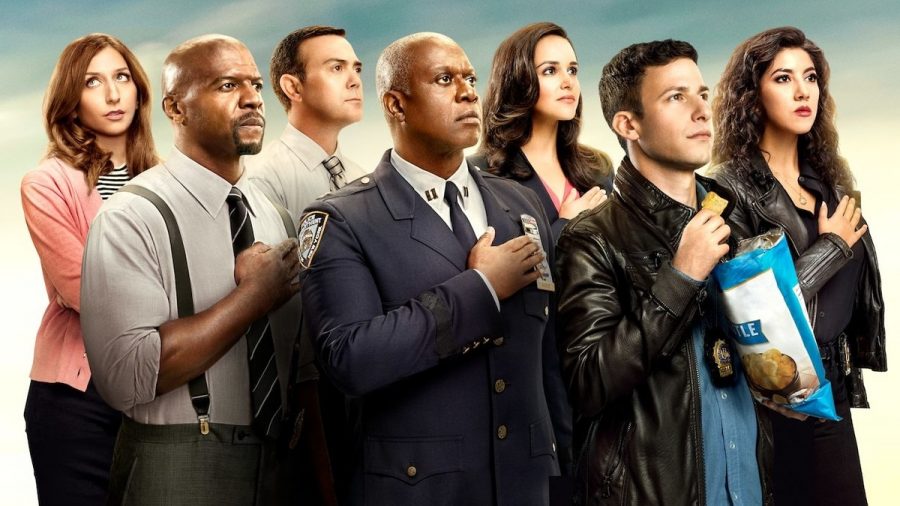
The basic idea I had for the novel is an epic fantasy setting meets a buddy cop movie. Brandon Sanderson vs. Brooklynn 99. The twist, of course, is that the two detectives, Summer and Eve, are qualified pharmacists. Initially, they’re brought onto the force to help track down a criminal gang distributing a lethal drug to the citizens of Mist Rock. When a series of high-profile murders rocks the city though, Summer and Eve will have to put all their skills to the test to bring the culprit to justice!

I’m definitely wary about starting my second novel—far more than when I started the first. I guess that comes with the territory. Trying something completely new also makes me extremely excited though. This book will feature new genres (police procedural/murder mystery), extensive dual point-of-view, and a more intimate narrative distance. It will also have more romance and humour than my other work.

Next time, I want to talk about plotting and story structure, and how planning my second novel felt far different than my first!

Featured

#AmQuerying

Hey there!

So I’ve decided to give a quick update about my last few weeks in writing. Naturally, with everything that’s going on, most of my mental space has been devoted primarily to family and friends, followed by my PhD and work in community pharmacy. If anything, the usual guilt I feel when I don’t write has been replaced with a more complex remorse when I do. Recently though, I came to the realisation that part of the process of fighting the COVID-19 pandemic is holding on to the things we hold dear. Allowing the virus to break our spirit seems to me a first step down a dangerous path to defeat.

On Wednesday, I entered the RTE Short Story Competition. My story, centered on a fictional lighthouse off the coast of Cork, was written in an attempt to explore isolation, duty, and the bond between father and son. I really enjoyed writing the piece, though as a rule short stories aren’t my style. Word count is something I’ve always found restrictive, especially when setting plays such a massive role in my work. I also think it’s more difficult to turn off the theoretical side of my writing brain when I’m aware how much each word has to count. I do feel some ideas are best debated with fewer characters or scenes, and I’m excited by a separate science fiction piece that I hope to finish soon. Going forward, I hope to write a lot more short stories based around my fantasy world.

Speaking of my fantasy world, I am thrilled to announce I have started querying my first novel with literary agents over the last few weeks! When my university shut on March 12th, I no longer had a lab in which to run experiments, meaning I found myself with slightly more time than I was used to. As a result, all of the groundwork I needed to do researching agents and submission guidelines got bumped up a few months. Rise of Exile, the first of a planned series, is an Epic Fantasy I started years ago, but only recently fully understood. Once I did, the manuscript came together very quickly late last year. I have a detailed outline for a potential sequel, so fingers crossed the first book gets picked up.

Next week, I want to tell you all about a new project that I’m working on. It’s a fantasy novel set in the same world as Rise of Exile, but it’s like nothing I’ve ever attempted before. Really excited to share some details!

Featured

Welcome to the new site!

Hello there!

If you’re reading this, allow me to officially welcome you to kylemaloneauthor.com. For those of you who arrived here as strangers, I’ll start with a small introduction. My name is Kyle. I’m a fantasy writer based in Cork, Ireland. I qualified as a pharmacist in 2017 and am currently studying for a PhD in pharmacology at University College Cork. I’m hugely passionate about science, healthcare, and education. But as you might have guessed, that’s not why we’re here.

For as long as I can remember, I’ve been writing fantasy stories. My biggest inspirations as a child were the Lord of the Rings films and the worlds J.R.R. Tolkien created. Yes, you have my full permission to consider that a cliché. But even before the release of The Fellowship of the Ring in 2001, I can remember writing. I often think the first stimulus for my stories was my country of birth itself. I’ve grown up and spent most of my life in Ireland, an island nation boldly facing the North Atlantic. Geographically speaking, it’s a country of rolling mountains, lush plains, and never-ending rain. Worldwide, Ireland is famed for music, sport, language, and literature. Arguably its people hold the best reputation of all. The Irish are by and large friendly, open-minded, and welcoming to outsiders. Importantly however, the effects of a tragic history continue to be felt. So yes, the Irish are a warm and pacifist people. But not once in the course of Irish history has the island fully been at peace.

This is the world into which Kyle Malone was born. Growing up in 21st century Ireland is a privilege, but it does mean swallowing a cocktail of nationalist pride, religious guilt, class division, and century-old grudges. In order to wash it all down, a glass of myth and legend is at hand. It’s always struck me how many European countries seem to have a national narrative, and only here and there a sprinkling of something fantastical to pad out the record. In Ireland, the opposite is true. Irish history has existed as a vassal of its neighbour’s for hundreds of years. Only recently has the island started to forge a path of its own. But even before the Norman conquest, the history of Ireland is at best a rough sketch—a story of chapters and verses so wispy it threatens to disintegrate into dust at the briefest touch. An optimist would call that a romance. A cynic would call it a myth.

I once wondered which, if any, of my fantasy stories were inspired by Ireland. Nowadays I struggle to find one that’s not. Recently, it’s dawned on me that thousands of years of Irish truth are shrouded in mist, lost beyond memory. It’s as if—in some strange telling of Oisin in Tír na nÓg—time simply ceased to exist. As an Irishman, that kind of thought process fills me with anguish. As a fantasy writer, it kindles a sort of hope.

Looking back now, I can see quite clearly the effect of my homeland on my work. As a 90’s kid, I entered the world around the same time as A Song of Ice and Fire, George R.R. Martin’s sprawling fantasy epic. I quite literally came of age in the era of Game of Thrones. The series is famous for its morally gray characters, bloody battles, and the gruesome fashion in which Martin axes off our favourites. It is by definition grimdark.

As a subgenre of fantasy, grimdark has captured the zeitgeist in the same way weird hair did the 1980’s. Authors from Joe Abercrombie and Rebecca Kuang became seemingly overnight successes with such novels. But while I love the complexity and punch grimdark has brought to the genre, I never felt at home in Westeros or the Union. Not in the way I do in Middle-earth. Not in the way I do in Ireland.

The fantasy I write has always been skewed noblebright. The basic argument of such work is that the actions of one person can make a difference, and that even if the person is flawed and opposed by strong forces, they can rise to heroic actions. Even in death, they can improve the lives of those they leave behind.

I think it is hard to grow up in Ireland and not feel sympathetic to the noblebright cause. After all, much of modern Ireland has been defined by small groups of people trying to beat the odds. From the Rebellion of 1798 to the Rising of Easter Week, Irish history is a catalogue of tragic romance—a series of A Bridge Too Far-esque almosts that just weren’t meant to be. And no matter what we say in the revisionist narratives today, the people who fought for freedom all those years ago were far from perfect, and even further from united. But fundamentally, they set aside their differences and rallied to a greater cause. They laid down their lives, if only to improve the lives of those left behind.

In a similar vein, the Irish psyche and grimdark fiction also make a poor match. Arguably, the countries most suited to grimdark are those who have very few scabs to pick at to begin with. Certainly, I can think of a few nations who see themselves as the heroes of human history—the dashing and brave adventurers who we all owe a good deal of thanks to. Perhaps having played the hero for so long, it’s refreshing for them to cast themselves in another role. Conversely, it’s hard to imagine much fervour in Ireland for a story where we get to play the villain, or worse, the oppressed. There is simply too much trauma in real Irish history for an exercise like that.

Overall, I think the reason I want to write noblebright fantasy (or Hopepunk) is because it is the kind of fantasy which rhymes best with the story of Ireland. For millennia, we have mythologised our history—from the fianna to the flying columns. We did it because it’s the only version of our history that offered us something—some vague promise of a brighter future that we could work towards. In essence, it offered us hope.

With that, I welcome you again to my website. For those of you knew “You’re Listening Now”—a blog I wrote for years on writing, reading, and life as a college student—it’s good to see you once more. Unlike my old blog, I will focus solely on writing here. Why? Well, over the years, I’ve found myself torn in two on every social media platform. I’ve tried to present the full Kyle—from pharmacist to fantasy writer—and can honestly say I had a blast doing so. But now I want my writing to have a place of its own. It has grown to be such a huge part of my life, and I truly hope you choose to follow the journey.

Next time, I’ll tell you all about my work.

Kyle

“Do not be too sad, Sam. You cannot always be torn in two. You will have to be one and whole, for many years. You have so much to enjoy and to be, and to do.”

J.R.R. Tolkien